
The weekend field guide
Selling records at a record show: preparing your table
How to prepare a table at a record show: choose and grade your stock, price it, set up crates and signs, handle payment and keep a record of what you sell.
To sell records at a record show, confirm the table terms with the organizer, choose stock that suits the crowd, grade it consistently, price it before you arrive and set up crates so diggers can flip through them easily. A tidy, honestly graded table that is easy to dig will outsell a messy one with better records.
This guide is for first-time and occasional dealers and for collectors thinning a collection. It covers choosing stock, grading, pricing, packing, table layout, payment and what to do after the show. It is general information, not legal advice. Check the organizer's rules about what you may sell, and any requirements that apply to your sales.
Start with the organizer
Use the contact on the show listing or the organizer's own website to ask how tables are assigned, what they cost and what they include. Ask for the table size, whether chairs and cloths are provided, how power works if you need it, when you may set up and when the public arrives, and when you must pack out. Ask what you may sell: some shows are strictly for records, while others allow compact discs, cassettes, posters, equipment and memorabilia.
Ask about the audience and the usual crowd. A show focused on a certain genre, such as jazz, punk or soul, will reward different stock than a general show. Keep the organizer's reply. Browse the organizer pages for others who run events in your area.
Choose and prepare your stock
Bring records that match the audience and that you can grade with confidence. Mix price levels: a few better records to draw attention, a core of reasonable titles and a bargain bin to bring in casual diggers. Do not bring everything you own. A smaller, cleaner selection often sells better than a crowded one.
Clean records and sleeves before the show. Wipe dust, remove stickers where you can without damage and replace torn or yellowed inner sleeves with fresh ones. Keep inserts with the record. Consider putting better records in protective outer sleeves so that sleeve wear does not increase during the day.
What to leave at home
Leave behind records you cannot grade with confidence, heavily damaged copies you would not buy yourself and anything the organizer's terms exclude. A smaller crate you can stand behind is better than a bigger one you cannot.
Grade honestly and consistently
Grading is a language between buyer and seller, and consistency matters. Common practice is to grade the disc and the sleeve separately, using terms such as mint, near mint, very good plus, very good, good and poor. Different dealers lean strict or generous, so tell buyers how you grade, and put a short key on a sign.
Grade conservatively. A buyer who finds a record better than described will return, and one who finds it worse may not. If a record has a flaw, note it on the sleeve or sticker. If you cannot test a record, say so. Our guide on record grading and pricing basics explains the terms from the buyer's side, which helps you see your stock as they will.
Pricing
Price before the show so you are not guessing at the table. Look at recent sales of comparable copies in the same condition and pressing, and consider what a buyer at your show would be willing to pay. Avoid pricing everything at the same level, since diggers look for both bargains and rarities.
Make your prices easy to see. Use stickers or small tags on the sleeve, or dividers that show the price for a whole section. Decide how much you are willing to negotiate and be consistent. Decide whether you will offer bundle discounts, such as a lower price for several records. Late in the day you may choose to reduce prices on slow items rather than carry them home.
Set up for diggers
Diggers want to flip through crates easily. Use sturdy crates or bins that hold records upright at a comfortable height, ideally on a table or a stand rather than on the floor. Do not overfill them. Records packed too tightly are hard to flip and easy to damage. Use dividers with clear labels for genre, artist or price.
Put your best records on display at the front, such as covers on a rack or wall. Keep your bargain bins at the end of the table or on the side so people stop to dig. Leave room in front of your table for people to stand without blocking the aisle. Bring a cart, a small first-aid kit, a sign with your payment methods, a calculator, pens, tape, bags and change.
Payment, receipts and local requirements
Work out your payment setup ahead of time and try it inside the hall, where signal can be weak. Carry change, including small bills. Write a receipt for larger purchases and keep a simple list of what you sold, so you know what moves.
Sales tax, seller registration and similar rules differ from place to place, so ask the organizer what applies and confirm with your local authorities. Nothing here is legal advice. If you sell items besides records, such as equipment or memorabilia, ask the organizer whether they are allowed.
After the show
Pack your unsold records the way you brought them, flat or upright and out of the heat. Count what sold and what drew questions, and note what people asked for that you did not have. That list tells you what to look for before the next show.
Collect names for want lists. Many dealers build a following by bringing records that customers asked for at the last show. When you want another table, the state pages list what is coming up, and the organizers' terms are worth comparing side by side. Our broader checklist for preparing to sell covers more of the basics.
Frequently asked questions
How do I get a table at a record show?
Use the organizer contact on the listing or the organizer's own website, and ask how tables are assigned and what they include.
Do I need to grade every record?
It helps buyers and builds trust. At minimum, grade the better records and tell buyers how you grade the rest.
Can I sell compact discs and cassettes as well?
That depends on the show. Ask the organizer what is allowed.
Should I mark down prices at the end of the day?
That is up to you. Many dealers reduce prices on slow items rather than carry them home.
Do I need to charge sales tax?
Requirements differ by place. Ask the organizer and your local authorities. We cannot say what applies to you.
Does a listing mean the organizer is endorsed?
No. It means the show is in the directory with a cited source.
Put your plan into motion
Find your next show.
Use the listing's official source to confirm the latest dates, public hours and entry rules.
Find shows in this directoryKeep planning
More useful guides

Planning your first show: a visitor checklist
Choose a show that suits your interests, confirm the practical details and keep the organizer’s information handy before you travel.
Read guide : Planning your first show: a visitor checklist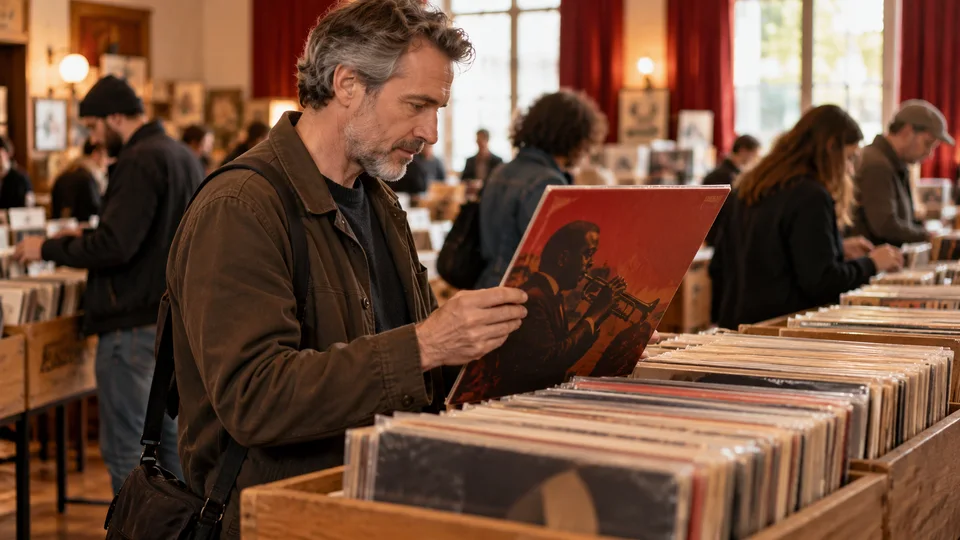
Preparing to sell at a vinyl record show: a seller checklist
Confirm your seller application, table equipment, setup time and organizer terms before booking a place at a vinyl record show.
Read guide : Preparing to sell at a vinyl record show: a seller checklist
Your first record show: what to expect and how to dig
What to expect at your first record show and how to dig: set a plan and a budget, work the crates, check condition, ask dealers and carry vinyl home safely.
Read guide : Your first record show: what to expect and how to dig
Record show etiquette for diggers and dealers
The unwritten rules of a record show for diggers and dealers: how to dig, share crates, handle records, bargain fairly, keep aisles clear and pack up with grace.
Read guide : Record show etiquette for diggers and dealers
Record grading and pricing basics for record show visitors
Learn record grading and pricing basics before a record show: how sleeve and disc are graded, what pressing and condition mean for price, and how to compare copies.
Read guide : Record grading and pricing basics for record show visitors