
The weekend field guide
Your first record show: what to expect and how to dig
What to expect at your first record show and how to dig: set a plan and a budget, work the crates, check condition, ask dealers and carry vinyl home safely.
At your first record show, arrive with a short want list and a budget, work the crates table by table, check condition before you buy and keep your vinyl flat and cool on the way home. Record shows are best treated as a treasure hunt with manners: you will see more records in a day than most shops hold, and the fun is in the digging.
This guide covers what the room is like, how to prepare, how to dig efficiently without frustrating dealers, how to inspect a record quickly, what to ask, how payment works and how to protect what you buy. Every show is different, so check the listing and the organizer's page for hours and admission, which appear on a listing when the source states them.
What a record show is like
A record show is a room of tables, each stacked with crates of vinyl, with some tables also selling compact discs, cassettes, posters, books and memorabilia. Dealers range from collectors thinning a collection to full-time sellers who travel to shows. Some tables are sorted by genre, some by artist and some are bargain bins where everything has a fixed price.
Shows vary in size. A small one might be a hall with a few dozen tables, a large one might fill an exhibition hall. Most shows have a public time, and some offer early entry at a different admission. Check the listing and the organizer's page for hours and admission before you go. Listings link to the organizer's source and display this information when the source states it.
Prepare before you go
Write a short want list of artists, titles or labels. A phone note works, but you may have patchy reception in a large hall, so keep it on paper or saved offline too. If you collect by pressing, note what you are looking for, such as an original pressing or a particular reissue.
Set a budget and decide how you will split it. It is easy to spend a lot on the first few good finds and have nothing left for the best table at the end of the room. Bring a sturdy bag or a small crate sized for records, and consider a lightweight cart for a big day. Bring a way to pay that suits the sellers you expect, and a few small bills for bargain bins. Wear comfortable shoes, because you will be standing and bending for hours.
How to dig
Digging is a skill. Start at one end of the table and work along the crates in order, flipping through the records with your fingertips rather than pulling each out. Hold the divider cards in place as you go. If you pull a record out, put it back in the same spot, facing the same direction. Keep your elbows in and your bag off the table.
If another digger is working the same crate, give them space or move along and come back. Do not dig directly beside someone who is reading the covers, and do not lean over a seller who is talking to a customer. If you are not sure how a table is organized, ask. A dealer will often tell you where a section is, or pull something out for you from the back.
Work the room in passes
Many diggers do a fast first pass to see which tables hold your genres, then a slower pass at the best ones. If you see something you really want, consider buying it right away, since a good record may not be there when you return.
Inspect a record quickly
Take the record out of the sleeve if the seller allows it and hold it by the edges. Tilt it under the light and look for scratches, scuffs and warps. Look at the label for writing or damage. Look at the sleeve for ring wear, seam splits, writing, water stains and missing inserts. Sealed records may be genuinely sealed or resealed, so ask the dealer what they know.
Some dealers have a player at the table, and many grade conservatively and can tell you what to expect. If you cannot play it, ask how it is graded and whether it plays through without skipping. Our guide on record grading and pricing basics explains common terms in more detail.
Ask the right questions
Dealers like questions that show you care. Ask whether the record is an original pressing, a reissue or a later pressing, and how they can tell. Ask whether it includes the inner sleeve, insert or poster that it came with. Ask whether other copies are in the crate, because the same title can vary in condition and price.
If you are looking for something specific, ask the dealer whether they have more at home or can look for it. Many dealers keep want lists for regular customers and bring stock to the next show. Give them your name and contact details if you are comfortable, and thank them. Avoid asking a dealer to explain an entire genre while others wait.
Prices, payment and bargaining
Prices are usually marked on the sleeve or on a sticker. Some dealers mark bargain bins with a flat price. Many dealers are open to a modest discount if you buy several records, and some will bundle a stack. Ask politely, and accept a no. Do not insult a seller by dismissing the price of a record they care about.
Ask how the dealer takes payment before you build a pile. Keep track of your total so you are not surprised at the end. When you buy, ask for a receipt on larger purchases, and keep it with your records. If a dealer will hold records for you while you walk the room, thank them and come back when you said you would.
Getting your records home
Vinyl is sturdy but not indestructible. Heat warps it, and a hot car can ruin records in a short time. Keep your bag out of direct sun, carry records upright rather than stacked flat under a weight, and put them in the cool part of the car, not the trunk or the back window shelf in summer. Do not leave them in the car while you eat.
At home, check each record, clean what needs it, replace worn inner sleeves with fresh ones and store them upright. Note what you bought, from whom and what you paid, which helps you remember where good finds come from. Use the state pages and the this-weekend page to find your next show.
Frequently asked questions
How much money should I bring to a record show?
That depends on what you want to buy. Set a budget in advance and bring more than one way to pay, since sellers choose how they take payment.
Can I play records before I buy?
Some dealers have a player at their table and some do not. Ask politely, and ask how the record is graded.
What if a record turns out to be damaged?
Check carefully before you pay. If you find a problem later, contact the dealer, but return terms differ from table to table and many sales are final.
Is it okay to take photos of the crates?
Ask the dealer. Many do not mind, but some prefer that you do not photograph their stock or prices.
Do I have to be an expert to go?
No. Many dealers like to talk with newcomers. Start with an artist or a genre you like and ask questions.
How do I find a record show near me?
Browse the state pages in this directory and check each listing's source for dates, hours and admission.
Put your plan into motion
Find your next show.
Use the listing's official source to confirm the latest dates, public hours and entry rules.
Find shows in this directoryKeep planning
More useful guides

Planning your first show: a visitor checklist
Choose a show that suits your interests, confirm the practical details and keep the organizer’s information handy before you travel.
Read guide : Planning your first show: a visitor checklist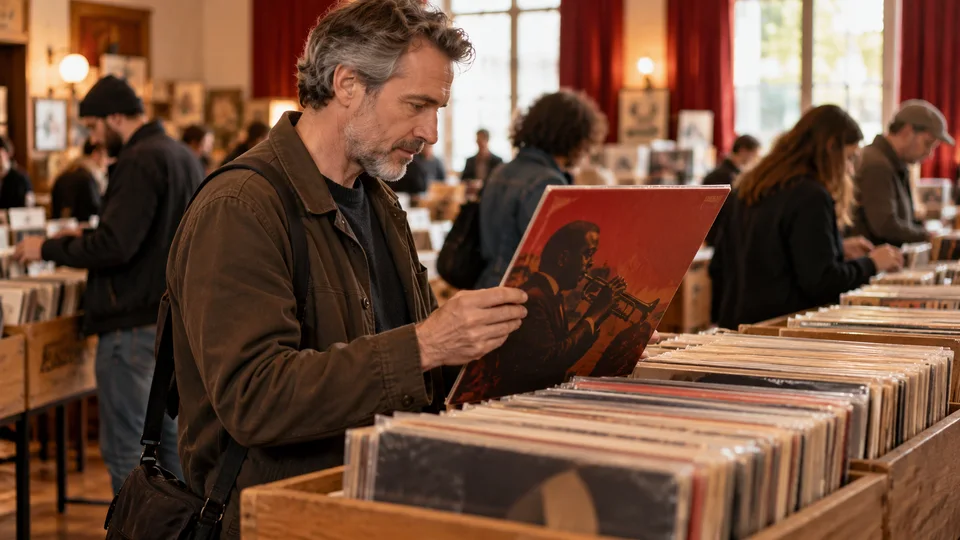
Preparing to sell at a vinyl record show: a seller checklist
Confirm your seller application, table equipment, setup time and organizer terms before booking a place at a vinyl record show.
Read guide : Preparing to sell at a vinyl record show: a seller checklist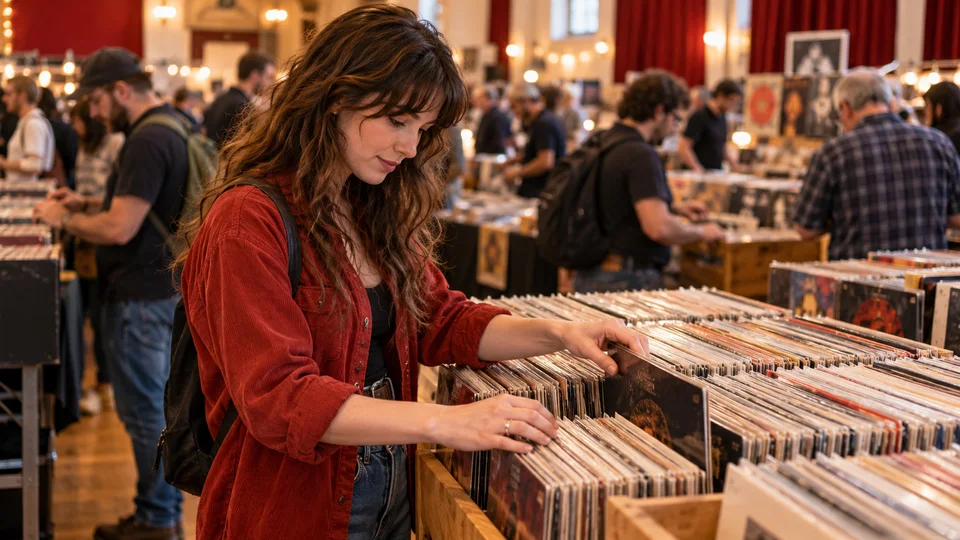
Selling records at a record show: preparing your table
How to prepare a table at a record show: choose and grade your stock, price it, set up crates and signs, handle payment and keep a record of what you sell.
Read guide : Selling records at a record show: preparing your table
Record show etiquette for diggers and dealers
The unwritten rules of a record show for diggers and dealers: how to dig, share crates, handle records, bargain fairly, keep aisles clear and pack up with grace.
Read guide : Record show etiquette for diggers and dealers
Record grading and pricing basics for record show visitors
Learn record grading and pricing basics before a record show: how sleeve and disc are graded, what pressing and condition mean for price, and how to compare copies.
Read guide : Record grading and pricing basics for record show visitors